From Breakthrough to Business: What We Learned at IS:CleanTech 2026 and What Comes Next
The definition of an investable science-based company is changing. Technical promise remains essential, but founders are increasingly expected to demonstrate customer understanding, commercial value, resilience and a credible path to scale much earlier in company development.
|
|
Share
Strong science remains the foundation of every science-based startup. But the definition of an investable, scalable company has evolved.
Founders are increasingly expected to understand their customers, articulate a specific business problem, anticipate manufacturing and scale, and demonstrate commercial traction while the technology is still developing. Technical validation and commercialization planning can no longer happen in sequence. The strongest companies are advancing both at the same time.
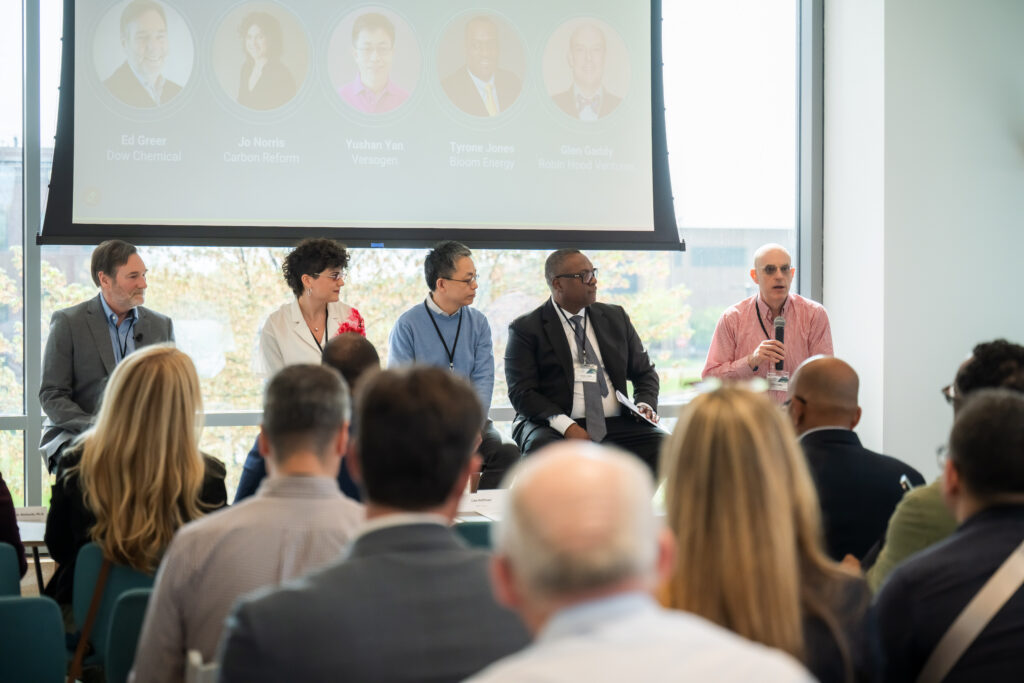
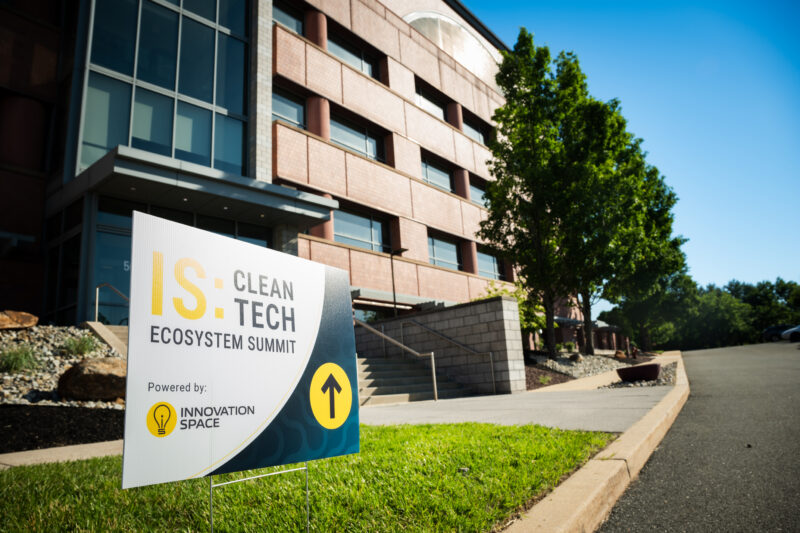
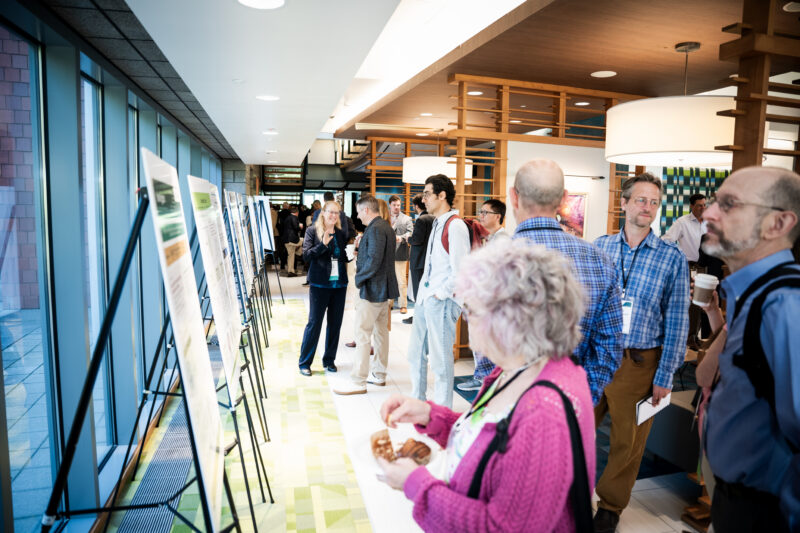
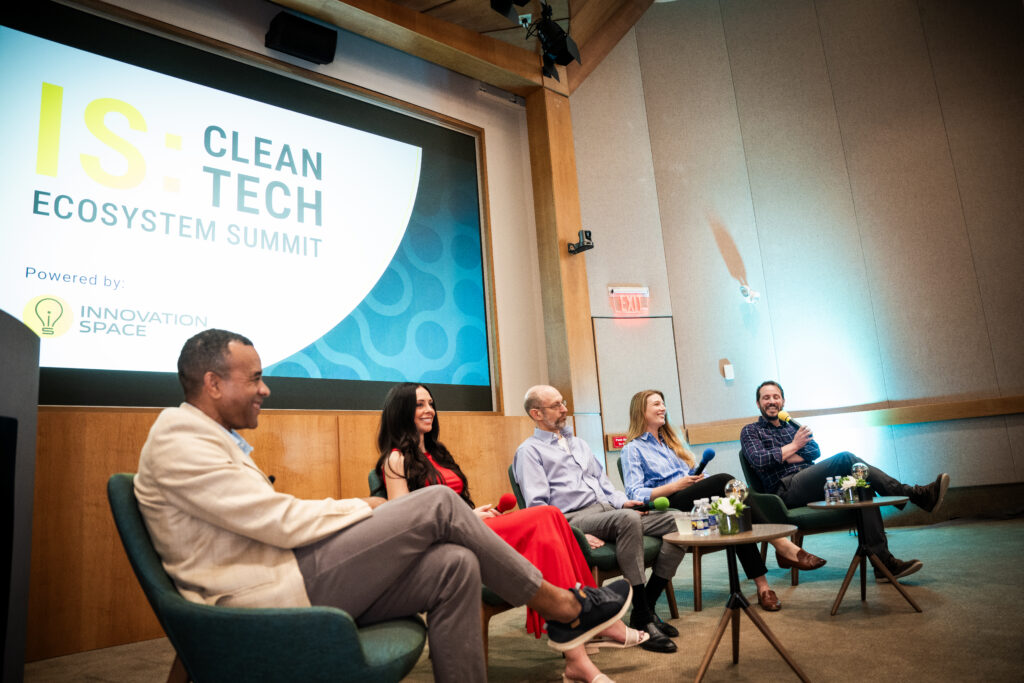
That shift was the clearest theme to emerge from the second annual IS:CleanTech Ecosystem Summit, where founders, investors, corporate partners and ecosystem leaders examined what it now takes to move a scientific breakthrough toward a scalable business. The conversations reflected a more selective funding environment, changing expectations around sustainability, growing demand for resilient technologies and the complexity of building productive corporate partnerships.
KEY TAKEAWAYS
The Definition of an Investable Company Has Evolved
Capital has become more selective, but the deeper shift is not simply that less funding is available. The definition of an investable company has changed.
Investors and corporate partners are asking commercial questions earlier. Who is the customer? What problem is the company solving? What does the customer do today? Why would they adopt a new solution? Who pays, and why? How will the technology be manufactured and scaled?
These questions do not diminish the importance of scientific achievement. They reflect the reality that venture capital and strategic investment are intended to help build companies, not simply advance interesting technologies.
Emily Dinu, founder and managing partner of Numinous Capital, drew that distinction clearly:
“I invest in companies. I can’t really invest in science. That’s not what venture capital is for.”
The same principle surfaced in the corporate discussions. Michael Hershkowitz, director of sustainable innovation at IFF, cautioned that “The world is on fire” is not a sufficiently specific problem statement. A company must be able to identify who experiences the problem, how they address it today and why a new solution is needed.
For founders, that means developing commercial fluency alongside technical expertise. They need to understand their cost structure, value chain, competitive landscape and path to scale. They also need to tailor their approach to the audience. A venture fund, corporate venture group and potential commercial partner may all view the same technology through different lenses.

Today’s founders are expected to think about these stages simultaneously-not sequentially.
What this means
Commercialization planning can no longer wait until after technical validation. The strongest companies are building scientific proof and business proof in parallel.
Sustainability Must Translate Into Business Value
The role of sustainability is also changing.
Sustainability remains important to investors, corporations and customers. But in many markets, environmental benefits alone are no longer enough to support adoption, particularly when customers are unwilling to pay a meaningful premium.
As Hershkowitz put it:
“Sustainability has to be the icing on the cake, not the cake.”
The technologies gaining traction are pairing sustainability with a stronger underlying value proposition. That may be lower cost, improved performance, greater supply security, reduced exposure to regulation or stronger operational resilience.
A sustainability advantage can still help a technology stand out during customer evaluation. It may also provide a form of protection against future regulatory or market changes. But companies increasingly need to explain the immediate business value first.
This does not mean sustainability matters less. It means that sustainability is functioning more often as a differentiator than as a complete commercial case.
What this means
The most persuasive sustainability story is no longer simply that a technology is better for the planet. It is that the technology solves a material business problem and delivers an environmental advantage.
Resilience Is Becoming a Commercial Driver
That shift in framing helps explain where momentum is building.
Across the summit, supply chain resilience, critical minerals and water emerged as areas of strong interest. The common thread was not a single technology category. It was the ability to reduce exposure to concentrated supply, scarce resources, geopolitical disruption and volatile inputs.
Critical minerals are one example. Companies are looking for ways to reduce dependence on supplies concentrated in a small number of regions. A new source does not necessarily need to eliminate risk entirely. It may create value simply by introducing a different risk profile and increasing strategic flexibility.
“One area where there has been a huge amount of tailwinds has been in critical minerals and supply chain resiliency,” said Matt Cohen, investment principal at Clean Energy Ventures.
Water is drawing attention for similar reasons. Scarcity is becoming a more immediate concern for industrial companies, while cost-effective solutions remain limited. Technologies that improve access, efficiency, treatment or reuse can address both sustainability goals and operational needs.
What this means
Some of the strongest opportunities in clean technology and advanced materials are emerging where sustainability and economic resilience reinforce one another.
Risk Must Be Anticipated, Not Simply Managed
The keynote from Anthony Schiavo, senior director and principal analyst at Lux Research, placed these shifts within a broader environment of risk, volatility and uncertainty.
Materials and chemical companies continue to see opportunities for growth, but earnings can be volatile and regulatory and social conditions can change quickly. For early-stage companies, risk management can no longer sit exclusively with the finance team. It affects market selection, product development, partnership strategy and the path to commercialization.
Schiavo also offered a useful distinction between risks that are difficult to quantify and risks that are impossible to understand. Regulatory change, public response and shifting market conditions may not produce precise forecasts, but companies can still monitor signals and develop informed scenarios.
“The risks may not be quantifiable, but they are forecastable. We can actually make meaningful predictions about the future of these risks.”
One example is the relationship between technology development and regulation. As a technology matures, gains momentum and builds a constituency, supportive policy may follow. Monitoring that momentum can provide insight into where regulatory conditions may be heading.
The message for founders was not simply to brace for uncertainty. It was to build the capability to anticipate it.

What this means
Founders do not need certainty, but they do need a disciplined way to consider how regulation, public sentiment, supply chains and market conditions could affect adoption.
Corporate Partnerships Require Organizational Fluency
Corporate partnerships can provide capabilities that capital alone cannot: co-development support, technical expertise, pilot opportunities, manufacturing insight and access to customers.
But partnering with a large company requires a different approach than pitching an investor.
A startup’s first corporate contact is often the door into the organization, not the ultimate decision-maker. Progress may depend on legal, procurement, IT, technical teams and internal business stakeholders. Timelines of three to six months are common, and enthusiasm in an initial meeting matters less than continued momentum across several conversations.
The incentives are also different.
“Corporate partners don’t make money off the valuation of the company; we make it off the sale of product,” said Paul A. Bielewicz, director of innovation, Gore Corporate Technology Incubator at W. L. Gore & Associates.
Founders therefore need to understand what a successful outcome looks like for the corporation. They should be specific about the capability, market access or development milestone they want the partnership to accelerate.
They must also evaluate the terms carefully. Exclusivity without minimum commitments and rights of first refusal can limit a company’s future options. Working with more than one strategic partner, when appropriate, may help preserve flexibility.
What this means
A promising technology may start the conversation, but understanding how decisions move through a large organization often determines whether the partnership advances.
Commercialization Is Increasingly a Team Sport
Taken together, these insights point to a more complex model of science commercialization.
Founders are being asked to integrate customer discovery, manufacturing, capital strategy, regulation, supply chains and corporate partnerships earlier in company development. Few early-stage teams possess all of that expertise internally.
The implication is not that every founder must become an expert in every discipline. It is that companies need access to an ecosystem capable of surrounding strong technical teams with the infrastructure, market insight, partners and specialized expertise required to build a business.
This is where commercialization ecosystems do important work.
At The Innovation Space, our long-standing collaboration with partners including DuPont, IFF and the University of Delaware helps connect founders with expertise, infrastructure and relationships that can make the path easier to navigate. Our role is not simply to make introductions. It is to help science-based companies build the capabilities and connections required to move from technical promise toward commercial impact.
What We Are Taking Forward
This year’s summit broadened its focus beyond clean technology to include advanced materials and chemistry. That expansion reflects the companies across The Innovation Space community and a broader shift in science commercialization.
Many promising companies no longer fit neatly within a single sector label. Materials and chemistry innovation increasingly intersects with energy, sustainability, manufacturing, life sciences, supply chains and other critical markets. The technologies may differ, but the commercialization challenges are often shared.
The summit also marked the close of the Spring 2026 Science Inc. | CleanTech and Materials cohort, with cohort founders pitching alongside other companies from The Innovation Space community.
Building on that broader focus, the June 2027 summit will evolve into IS:Materials Ecosystem Summit. The expanded scope will create space for a wider range of science-based companies while maintaining the event’s emphasis on commercialization, capital, corporate partnerships and the path from scientific innovation to scalable business. It will also align more clearly with the IS:Life Sciences Ecosystem Summit, creating a stronger framework for convening the two core technology communities we support.
If one message defined this year’s summit, it was this: the future of science commercialization belongs to companies that pair technical excellence with commercial discipline, and to ecosystems that help them do both.
Our thanks to the sponsors who made this year’s event possible: IFF, DuPont, the University of Delaware, the Delaware Prosperity Partnership and Fisher Scientific.




FAQS
Commercialization is the process of turning a scientific or technical innovation into a product, service or business that solves a defined customer problem and can be manufactured, adopted and scaled.
In addition to strong science, investors increasingly look for a clear customer problem, evidence of market demand, commercial traction, a realistic path to manufacturing and scale, and a business model capable of generating returns.
These areas address immediate economic and operational risks, including concentrated supply, geopolitical disruption, resource scarcity and volatile inputs. Technologies that reduce those risks can offer both commercial and sustainability value.