The Economic Impact of Science Startups: What the Data Shows
New analysis reveals how companies supported by The Innovation Space are driving job creation, capital investment, and long-term economic growth across Delaware, the Greater Philadelphia region, and the United States.
|
|
Share
KEY TAKEAWAYS
AT A GLANCE (2025)
The Big Picture: Startup Job Creation and Economic Impact
Science-based startups do more than advance technology. They create jobs, attract investment, and contribute to long-term economic growth.
A recent analysis by Economic Systems Inc. (ESI) puts real numbers behind that impact, showing how companies supported by The Innovation Space contribute to job creation and economic activity across Delaware, the Greater Philadelphia region, and the United States.
In 2025 alone, these companies contributed to $703.9 million in total economic output across the United States and supported 2,490 jobs. In Delaware, that impact reached $356.1 million in output and 1,250 jobs.
Together, these numbers show how startup growth translates into broader economic activity over time.
The impact comes from several sources: operations and infrastructure investment, resident companies, post-incubation growth, and accelerator-supported firms.
Explore The Innovation Space’s Overall Impact
The economic impact analysis is one part of a broader story about how science startups grow and scale within The Innovation Space ecosystem.
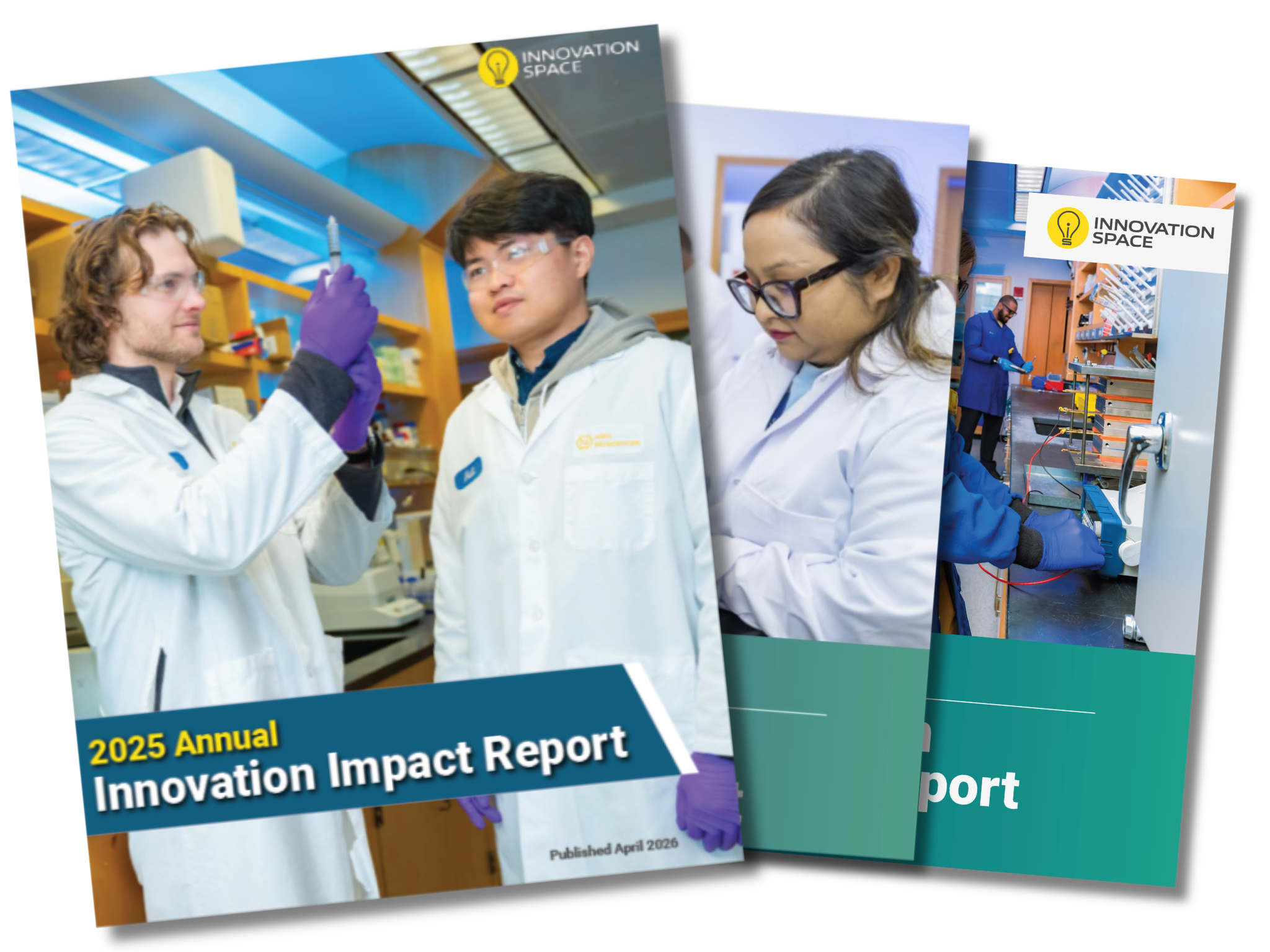
Our annual Impact Report highlights startup milestones, capital raised, job creation, ecosystem partnerships, and long-term company growth across life sciences, clean technology, and advanced materials.
How Innovation Translates into Economic Impact
Economic impact is created and sustained through multiple drivers:
Why Infrastructure Matters for Startup Growth
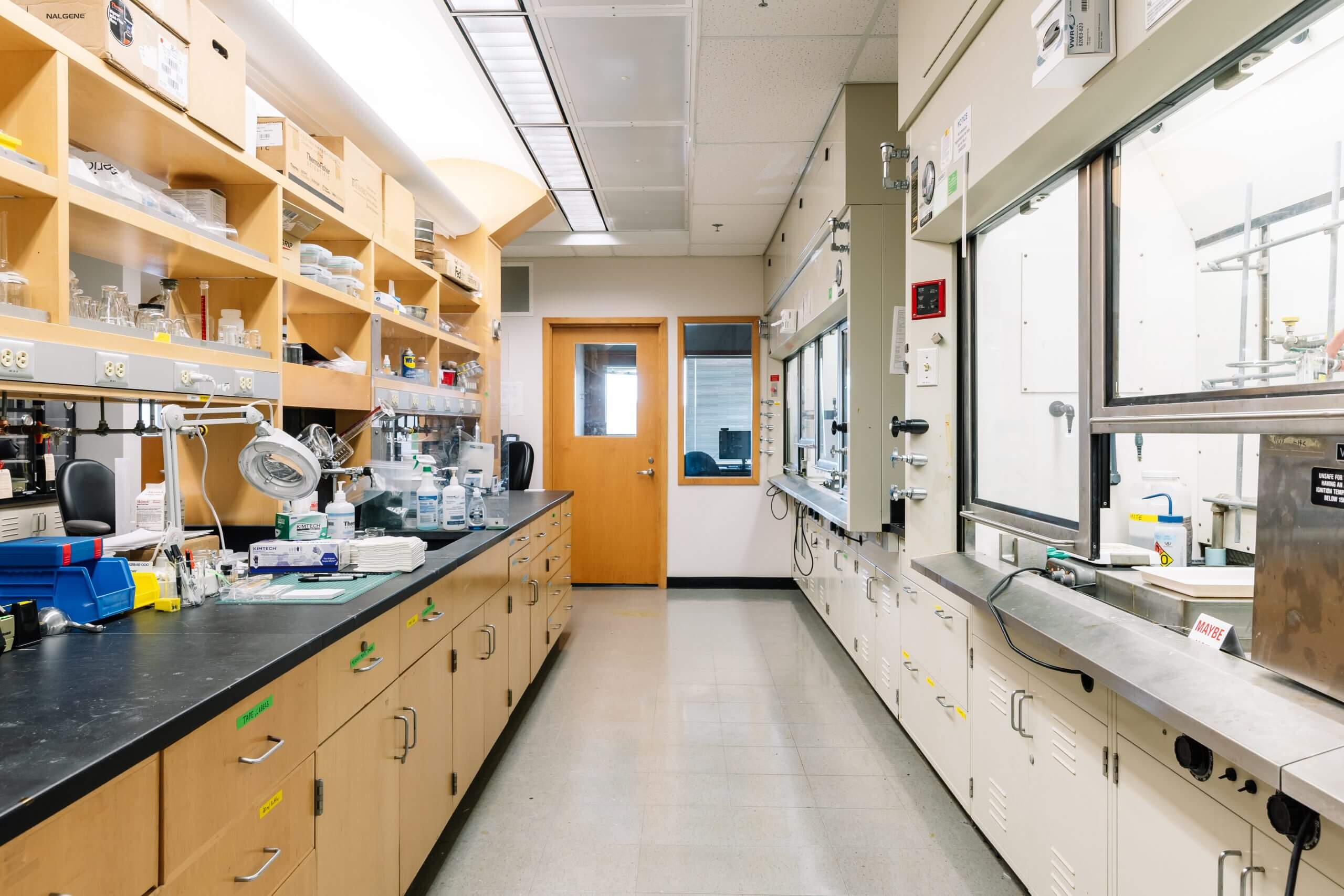
For many science-based startups, infrastructure is one of the biggest barriers to entry.
Building a lab, purchasing equipment, and maintaining compliant space requires significant upfront investment. Shared lab space and equipment reduce that burden, allowing founders to focus capital on product development, hiring, and validation instead of infrastructure costs.
This model helps companies move faster while reducing execution risk at the earliest stages.
The Multiplier Effect
The impact of startup growth extends well beyond the companies themselves.
Direct economic activity leads to additional effects across the broader economy, including supplier networks, service providers, and local spending.
In 2025, $299 million in direct output translated into $704 million in total national economic impact.
$299M
Direct Output
$704M
Total Economic Impact
2.4x
Multiplier Effect
A Growing Return on Investment
One of the most important findings is where the largest impact occurs.
Post-incubation companies account for the largest share of economic impact in Delaware and continue to grow over time.
This demonstrates how early-stage infrastructure and commercialization support create long-term economic value that compounds as companies scale.
For policymakers and funding partners, this reinforces the value of sustained investment in innovation infrastructure.
Why the Economic Impact of Startups Matters
What’s Ahead
If current trends continue, companies supported through The Innovation Space are projected to support thousands of additional jobs and generate hundreds of millions in additional economic output by 2035.
Looking ahead, continued investment in infrastructure, partnerships, and commercialization support will play an important role in sustaining this growth.
“Innovation is one of the most effective ways we can grow our economy, create jobs, and improve lives for generations to come.”
— Governor Matt Meyer
Download the Full Economic Impact
The full ESI report includes detailed breakdowns by geography, program type, economic output, and long-term projections.
What We Offer
Lab Space & Equipment
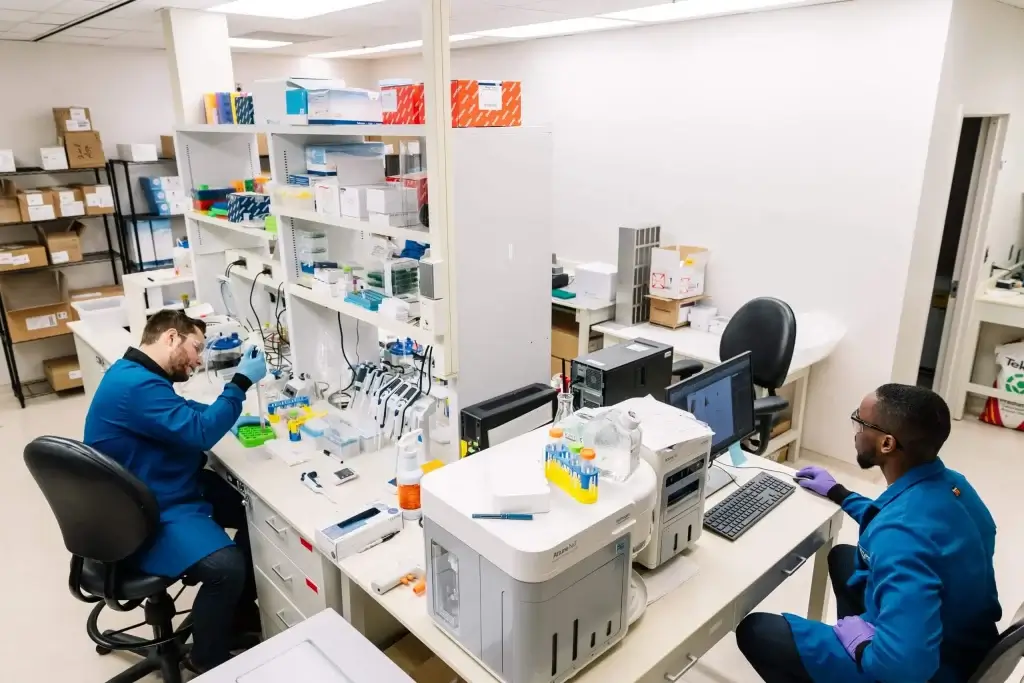
Innovation Space offers 130,000 sq ft with 90+ labs, state-of-the-art equipment and flexible terms to support your science-based startup today.
Customized Support
Innovation Space provides critical support elements required to accelerate science-based startups to commercialization.

Funding & Programs
From Investment to Mentorship Events to Business Building Accelerator programs, the Innovation Space can help your startup thrive.